Proven results
From strategy to delivery, see how we have supported organisations through complex transformations.
RVO: implementing the new Common Agricultural Policy (nGLB)
The challenge
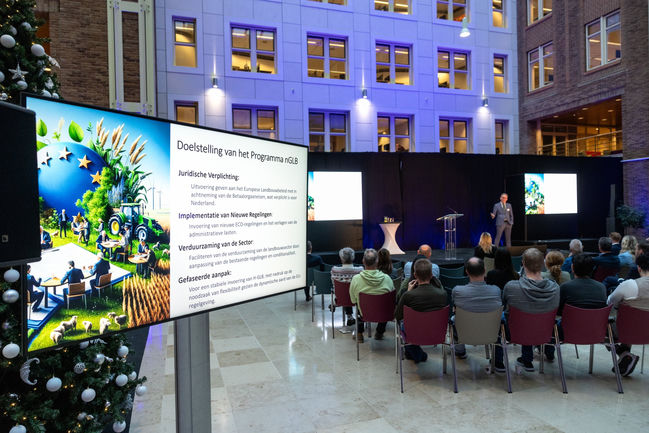
With the new Common Agricultural Policy (CAP) of the European Union, the Netherlands is required to deliver a fundamentally renewed execution of agricultural subsidies, greening and rural development. For the Netherlands Enterprise Agency (RVO) this means a multi-year transformation in which legal obligations, new regulations, sustainability of the sector and a fully digital execution must come together. The complexity is considerable: the nGLB programme touches a broad chain of parties, including the Ministry of Agriculture, Nature and Food Quality (LNV), the twelve provinces, the water boards and the NVWA. Each party has its own responsibilities, systems and interests. At the same time, tens of thousands of agricultural entrepreneurs must be served on time, transparently and lawfully, within strict European deadlines and under scrutiny of the European Commission and national audit institutions. A small execution error or a missed chain dependency can directly lead to delayed payments, financial corrections from Brussels or legal proceedings from applicants.
Our approach
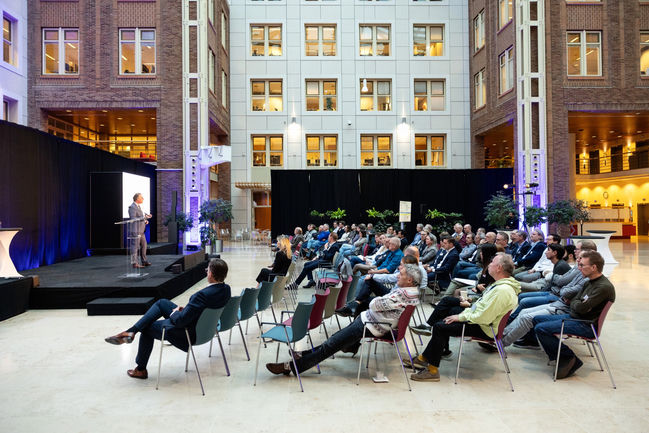
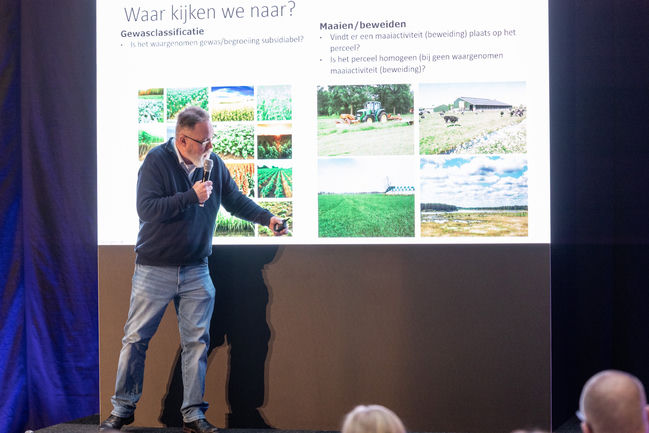
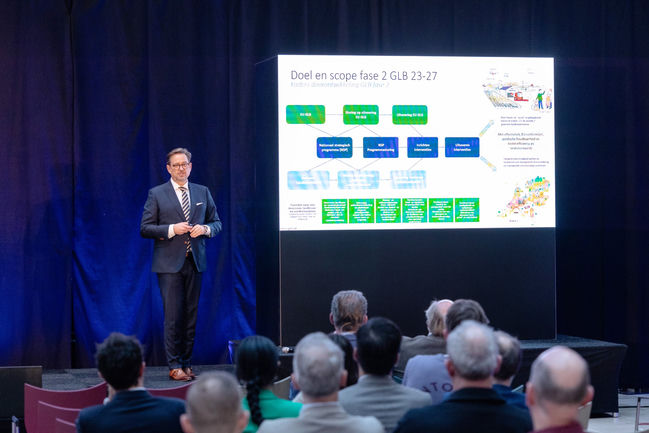
ITsPeople supports RVO in the governance and delivery of the nGLB programme. Following the pyramid principle, we crystallised the core message together with the client: a timely, transparent and controllable implementation of the new CAP for all chain partners involved. From this foundation we established a phased approach that integrates legal obligations, new regulations, sector sustainability and digital execution into one delivery. We provided programme and project management, business analysis and control expertise across multiple workstreams, monitored dependencies between RVO, LNV, the provinces, the water boards and the NVWA, and installed a governance rhythm enabling leadership and the steering committee to manage scope, schedule, risks and benefits based on facts. Particular attention went to chain orchestration, data quality, auditability and communication to chain partners and end beneficiaries. The final presentation in the RVO atrium marked an important milestone in the delivery of phase 2 (GLB 23-27) and confirmed that a complex, multi-stakeholder transformation can be turned into real results.
Results
“Implementing the new CAP requires tight governance, chain orchestration and the ability to keep legal, policy and digital tracks aligned. ITsPeople has made a meaningful contribution to this.”
Programme Manager nGLB, Netherlands Enterprise Agency (RVO)
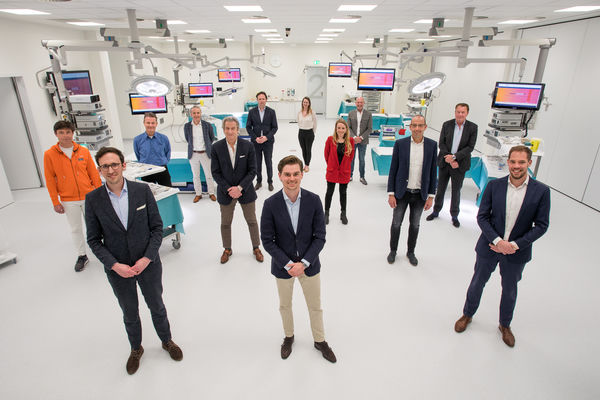
Amsterdam UMC (AMC): Hackathon 'Code to make a difference' in the skills lab
Video coming soon
The challenge
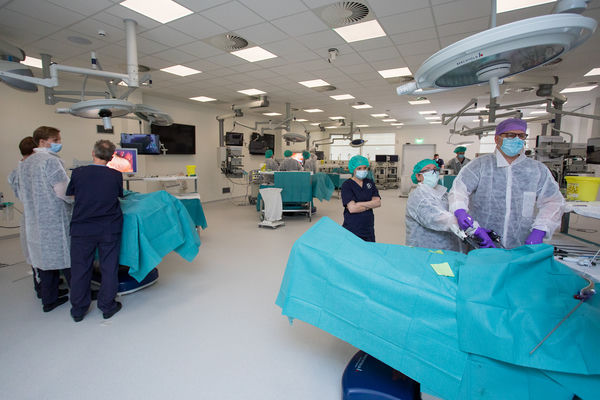
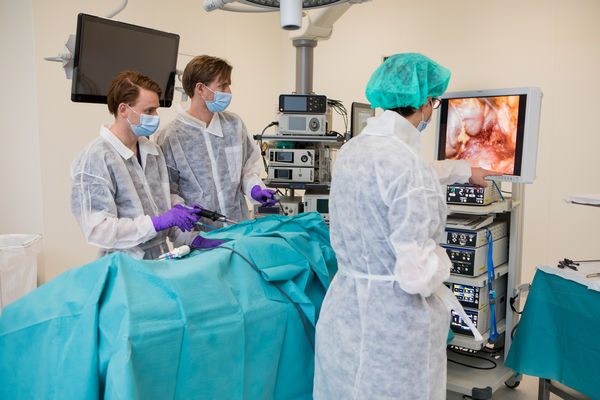
In the training and skills lab of Amsterdam UMC (AMC), surgeons, trainers and technology come together to further improve the quality of laparoscopic procedures. The question was concrete: can we give surgeons live and objective feedback during training based on data from the operation, instead of afterwards based on subjective observations? In a medical setting, any such solution must be reliable, explainable and usable from the very first second: the information must not distract the surgeon, must fit the clinical workflow and must be demonstrably accurate enough to act on. At the same time, a complex ecosystem of parties is involved: the hospital itself, trainers, medical-technical suppliers, data platforms and software partners. Validating this kind of innovation quickly, without disrupting regular care, requires a concentrated, multidisciplinary approach, exactly what a hackathon is designed for.
Our approach
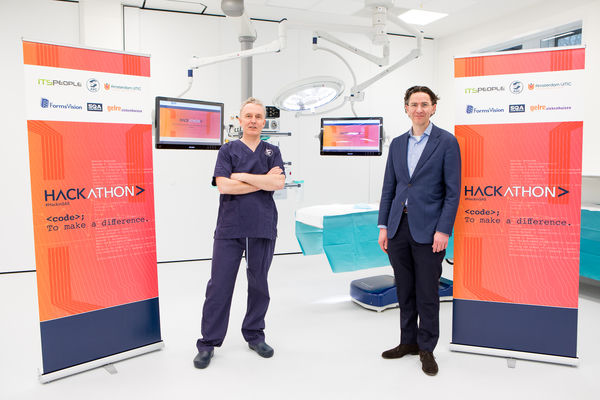
Together with Amsterdam UMC and our partners FormsVision, SOA and Gelre ziekenhuizen, ITsPeople organised a hackathon under the motto 'Code to make a difference' in the AMC skills lab. Following the pyramid principle, we set the core message upfront: prove that data from the operating theatre can be converted into real-time, reliable feedback for the surgeon during training. Within a tight timeframe, multidisciplinary teams were formed consisting of surgeons, data scientists, software engineers and business analysts. We provided the programme and project management, team facilitation, alignment with the clinical use case and oversight on scope, governance and explainability. During the hackathon, live data from the laparoscopic setups was captured, processed and fed back in a feedback loop towards the surgeon. Results were iteratively validated against the judgement of the experienced trainers in the skills lab, allowing us to establish how well data-driven feedback aligned with human expert assessment. The approach showed how strategic innovation, ecosystem collaboration and hands-on delivery can reinforce each other within a single session.
Results
“This hackathon has shown that data-driven, real-time feedback in the OR is no longer a future dream. We were already able to provide surgeons with reliable information live during training.”
Surgeon-trainer, Amsterdam UMC
Geldmaat: establishing a national cash infrastructure
The challenge
Geldmaat was tasked by three major Dutch banks (ABN AMRO, ING and Rabobank) to establish a completely new, neutral cash infrastructure for the Netherlands. Thousands of ATMs, deposit safes and deposit machines had to be transferred from the individual banks, consolidated and harmonised under one brand, one governance model and one technology stack. All whilst maintaining uninterrupted cash services for millions of Dutch consumers, SMEs and corporate customers. The challenge was multifaceted. First, continuity of cash services had to be guaranteed: every outage directly impacts consumer confidence and trust in payments. Second, a significant cost reduction programme had to be realised through consolidating ATMs, optimising locations and restructuring the cash value chain. Third, a complex stakeholder ecosystem was involved: DNB as regulator, the three implementing parent banks as shareholders and client, cash-in-transit companies for secure transport, municipalities and resident organisations for physical location decisions, and advocacy groups protecting cash accessibility for vulnerable groups. Fourth, Geldmaat as a new organisation had to be built from scratch: processes, people, systems and governance had to reach maturity in parallel with the rollout.
Our approach
ITsPeople provided a multidisciplinary team of programme, project and change managers, business analysts and control experts who orchestrated the rollout from the Transition Support Office. Using the pyramid principle, we started by crystallising the core message for management and shareholders: one neutral, reliable and affordable cash infrastructure for the Netherlands. From this foundation, we designed the Target Operating Model for the new cash chain: from filling, maintenance and incident handling to customer contact and chain reporting, and translated it into a phased migration roadmap by region and by bank. A Business Control Framework provided management and the steering committee with real-time visibility of progress, risks, benefits and costs per tranche, enabling decision-making based on facts rather than intuition. We coordinated collaboration with cash-in-transit companies, location owners, municipalities and advocacy groups, and ensured tight governance at the interface with the three implementing banks. In parallel, we guided the setup of the 24/7 service operations centre, SLA management with suppliers and compliance assurance to DNB. Risk management was continuous, with scenario planning for outages, security incidents and political sensitivities. Change management and communication to employees, banks, entrepreneurs and consumers were integral to each phase, as was knowledge transfer to the Geldmaat organisation so ownership gradually shifted.
Results
“ITsPeople brought the calm and structure needed to make a programme of this scale succeed operationally and politically. Strategically sharp, operationally hands-on.”
Programme Director, Geldmaat

Geldmaat: complete IT transformation & hosting
The challenge
Post-launch, Geldmaat largely relied on IT services from its parent banks, practical for the start, but unsustainable for an independent company needing to operate efficiently, scalably and autonomously. To make this maturity leap, Geldmaat had to establish a completely new IT landscape: from core applications for ATM fleet monitoring and management to ERP, service management, identity & access management, data warehouse and business intelligence, workplace IT, connectivity and a brand new hosting environment. The transformation had to happen whilst keeping existing services operational, in effect, open-heart surgery, under strict requirements for information security, financial regulatory compliance, operational resilience, auditability and tight cost control. Moreover, dependency on parent banks had to be carefully unwound without disrupting SLAs or losing critical expertise. An added complication: the specialised ATM IT supplier market is limited, and every change directly affected thousands of physical devices distributed across the country.
Our approach
ITsPeople acted as strategic partner to the CIO, providing programme, project, architecture and control capacity. Following the pyramid principle, we first designed a clear IT strategy and IT operating model with one overarching message: a secure, scalable and affordable IT environment enabling Geldmaat to operate autonomously and agilely. We then defined the sourcing strategy for hosting, managed services and specialised ATM partners, including make-or-buy decisions per domain. A multi-year transformation programme was established with clearly delineated workstreams: a new hosting environment (hybrid cloud), core systems migration, modern service management platform rollout, identity & access management implementation, data and monitoring platform for the ATM fleet, workplace renewal and strengthened cybersecurity stack. From the Transition Support Office, we monitored dependencies between workstreams, suppliers and the business. We managed risks via a Business Control Framework, coordinated tenders and contracts with hosting partners, and guided application migration with minimal service disruption. Security-by-design, operational resilience readiness, auditability and cost control guided every design decision. Finally, we supported HR and knowledge preservation: employees were actively engaged in new ways of working, and critical expertise was transferred from parent banks to Geldmaat through structured transition plans.
Results
“This transformation touched every part of our IT. ITsPeople not only helped us determine strategy, but ensured we made real progress every single day without closing the shop.”
CIO, Geldmaat

CAK: transformation to a new financial system
The challenge
CAK manages substantial public funds, including for Long-Term Care (Wlz), Social Support (Wmo) and overseas schemes. The existing core financial system was severely outdated, expensive to maintain, staffed by scarce expertise and did not meet modern requirements for reporting, auditability, chain integration and data-driven governance. CAK therefore decided to completely replace the core financial system, with impact on general ledger, procurement, commitments, accounts receivable and payable, reporting and numerous interfaces with chain partners like the Criminal Enforcement Agency, the Healthcare Institute and care providers. The complexity lay in combining deep functional transformation with non-negotiable continuity: payments to care providers, patient co-payments and invoicing could not stop for a day. At the same time, the system had to comply with BIR/BIO, relevant public audit frameworks and stringent accounting requirements, and the finance organisation itself had to be prepared for new processes, new roles and stronger data governance. Every element directly affected vulnerable citizens and politically sensitive matters, leaving no room for error and making transparency to regulators and Parliament critical.
Our approach
ITsPeople delivered programme and project management, business analysis, architecture and control expertise. Following the pyramid principle, we first formulated the core message for leadership and the board: a future-proof financial foundation combining continuity, legality and agility. We then conducted a thorough process analysis of the complete finance chain: general ledger, procurement, commitments, AR/AP, invoicing, reporting and chain interfaces, and translated this into functional and non-functional requirements for the new platform. In parallel, we developed a Target Operating Model for the finance organisation, including roles, authorities, new ways of working and data governance. A phased migration strategy was designed with clear go/no-go criteria per release, based on risk, value and technical feasibility. We established a Business Control Framework enabling the steering committee and leadership to maintain real-time grip on scope, schedule, budget, benefits and risks. Close collaboration with internal CAK teams, the platform vendor, the external auditor and chain partners ensured auditability, legality and compliance were built into the design from day one, not retrofitted. Change management, training and user adoption ran as a golden thread through the programme: systems only land when people are ready. Finally, we embedded knowledge in the CAK organisation through coaching, documentation and hands-on participation.
Results
“ITsPeople combined deep financial expertise with tight programme governance. Exactly what a public agency needs for a transformation of this scale.”
Director Finance & Control, CAK

TKP: preparing for the Pensions (Future) Act
The challenge
As a pension administrator for several major pension funds, TKP faces one of the largest transitions in the Dutch pension sector: moving to the new system under the Pensions (Future) Act. Each participating fund must 'transition' to a new contract by the government-set deadline, with complete recalculation and transfer of entitlements for millions of beneficiaries. For TKP, this means processes, systems, data, communications and governance must all be adapted simultaneously, for multiple clients, each with their own choices on contract type, transition method and compensation, within an unforgiving legal deadline and under close supervision from DNB and AFM. The challenge is not just technical (administration systems, calculation models, interfaces with actuaries, asset managers and custodians) but also governance and legal: fund boards must make informed, balanced decisions; beneficiaries must be clearly informed; regulators must have confidence in control. One data quality error or missed dependency between workstreams could lead to delays, reputational damage or legal proceedings.
Our approach
ITsPeople supports TKP in strategic and operational preparation for the Pensions Act. We provide programme and project management, business analysis, data quality experts and change specialists to various workstreams: contract and product design, transition and recalculation, data quality, system changes, beneficiary communication and governance. Aligned with the pyramid principle, the core message continuously guides: timely, transparent and controllable transition for every client fund. We helped establish a comprehensive programme plan with clear milestones per client fund and workstream, including critical path analysis and dependencies. A Business Control Framework gives leadership, fund boards and regulators real-time visibility of progress, risks, data quality and benefits. Particular attention went to data quality, the foundation for every correct transition calculation, and chain management with actuaries, asset managers, custodians and administration systems. We support TKP in dialogue with fund boards and regulators, developing impact analyses, decision documents and balance statements, and in beneficiary communications where complex matters must be made accessible. Risk management is continuous and explicit: scenarios for delays, data errors or legal objections are modelled and mitigated in advance. Knowledge preservation within TKP is central to every step, ensuring the organisation can independently navigate the new pension system reality post-transition.
Results
“The Pensions Act touches everything: our processes, systems, people and clients. ITsPeople helps us keep it manageable, governable and explicable.”
Pensions Act Programme Manager, TKP
Digital transformation at a major insurance company
The challenge
A major Dutch insurance company faced a major digital transformation. The €20 million programme was hampered by fragmented processes, lack of visibility into progress and costs, and poor alignment between strategy and execution. Multiple sub-programmes had their own reporting, priorities and steering committees, causing leadership to lose sight of the big picture. There was a need for an integrated governance framework that provided visibility, predictability and strategic control, without hampering execution speed.
Our approach
ITsPeople designed a Target Operating Model that served as a compass for the entire transformation, bridging strategy, customer journeys, processes, data and technology. In parallel, we established a Business Control Framework bringing together financial, operational and risk KPIs in one integrated dashboard, enabling leadership and the steering committee to manage based on current facts rather than monthly reports. A Transition Support Office, staffed by ITsPeople consultants, provided daily coordination, dependencies management across workstreams, escalation discipline and decision preparation. Our consultants worked hand-in-hand with internal teams; knowledge transfer, coaching of programme managers and anchoring of new ways of working were integral to the approach. Special attention went to change management, adoption and explicitly communicating benefits per release.
Results
“ITsPeople helped us gain control of a complex transformation programme. Their combination of strategic insight and hands-on mentality is unique.”
Director Digital Transformation, Major financial services company
NIS2 implementation at a public sector organisation
The challenge
A major public sector organisation had to comply with the NIS2 Directive before the legal deadline. The complexity of the regulation, combined with an extensive IT landscape, dozens of chain partners and multiple internal stakeholders, made this a formidable challenge. The organisation wanted more than compliance on paper: they needed an approach that actually translated NIS2 requirements into workable processes, board-level accountability and demonstrable control of suppliers and supply chain.
Our approach
We started with an extensive gap analysis against NIS2 requirements, comprehensively reviewing technology, processes, governance, supplier chain and incident handling. Based on this, we developed a compliance roadmap with clear priorities, milestones and ownership. Processes were redesigned to meet NIS2 requirements, governance structures were established (including a CISO office with clear mandates), and risk management and incident response capabilities were strengthened. Board assurance was central to our approach: leadership and the board were engaged in their personal accountability under NIS2 and given a decision-making cadence and reporting line that reflected this. Finally, we guided awareness and training programmes for employees and suppliers, so compliance was embedded in behaviour, not just on paper.
Results
“NIS2 implementation seemed impossible. The ITsPeople team made it manageable, understandable and, most importantly, embedded in our organisation.”
CISO, Government public sector organisation
Security governance at an academic medical centre
The challenge
An academic medical centre struggled with information security policy that did not align with healthcare professionals' daily practice. BIO/NEN 7510 standards were insufficiently followed, not from unwillingness but because policy was too abstract and disconnected from the shop floor. Audits repeatedly uncovered the same findings, staff experienced security as an impediment to patient care and incidents were underreported. A solution was needed that combined security awareness with workable procedures and alignment with the reality of a complex, 24/7 healthcare environment.
Our approach
ITsPeople adopted a human-centred approach. We combined BIO/NEN 7510 compliance with a comprehensive security awareness programme where behaviour and culture received equal weight to policy and technology. Policy was rewritten in plain language, procedures were simplified and linked to concrete healthcare scenarios. Each department appointed security champions who acted as ambassadors between the shop floor and the CISO organisation. We developed workshops, e-learning modules and regular phishing simulations, and established a governance rhythm where leadership, the board and department heads regularly reviewed security KPIs. The result: security became a shared responsibility rather than an IT matter, and compliance became a natural consequence of how people worked, not a separate exercise.
Results
“What sets ITsPeople apart is their focus on people. Technically we were advanced, but adoption was lagging. They solved that.”
CIO, Academic Medical Centre
Recognise yourself? Let's talk.
Every transformation is unique. We'd be happy to discuss the approach that fits your specific situation.
Get in touch →